
Typical Results
100,000 offences > just 238 key culprits!
In the first year of operation AutoSpeedWatch captured nearly 100,000 offences of which ~7,500 were from 'persistent' speeders that had been caught 20 times or more. Those 7,500 offences were generated by just 238 vehicles! Rather than flood police with 1000s of records, AutoSpeedWatch empowers efficient policing, by showing exactly which vehicles cause the worst road safety threats.
Persistents become obvious. Untaxed/Un-MoT'd vehicles highlighted
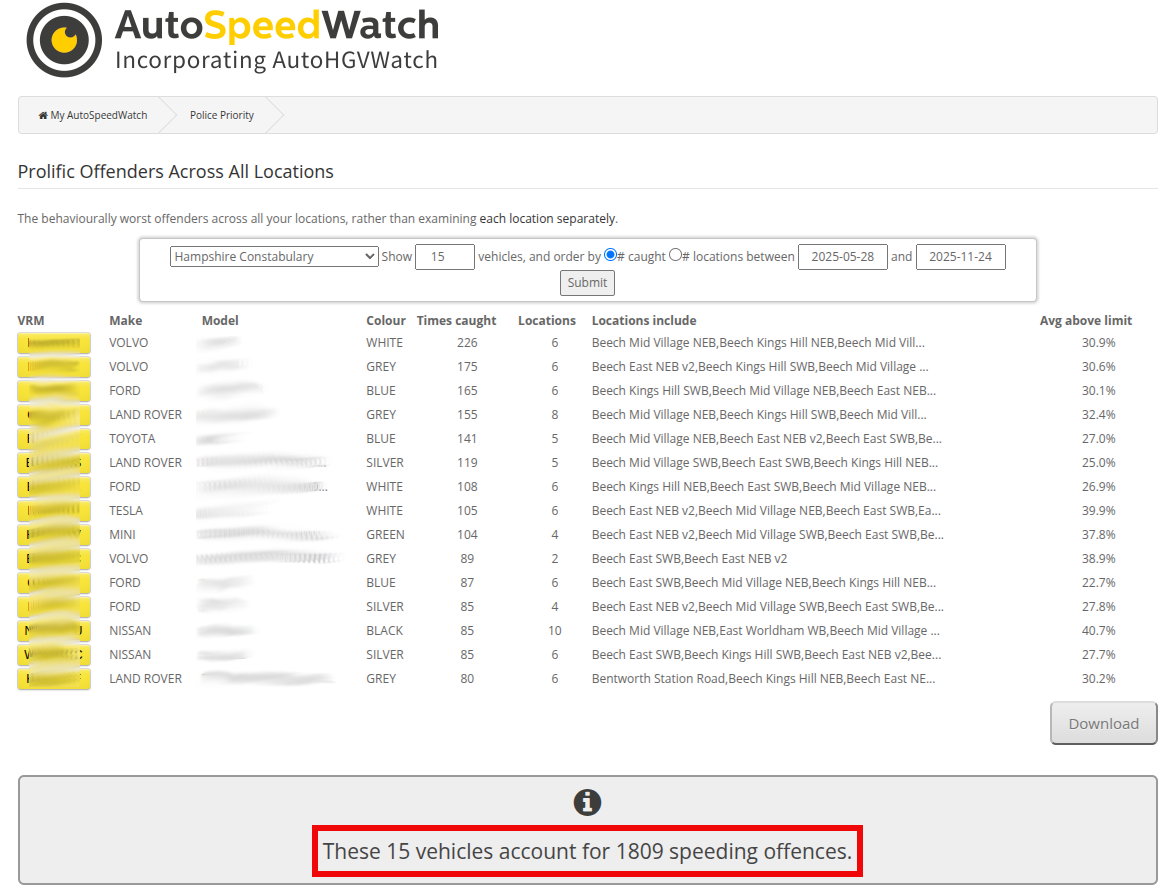
Once verified, the highest and most persistent speeders 'bubble to the top'... and over a few days those with repeated poor driving behaviour become clearly evident.
AutoSpeedWatch identifies those vehicles causing the bulk of the safety threat; typically just 15 vehicles account for over 1200 offences in 6 months. This is behavioural speeding from poor driving.
For example, a Roadside Unit was installed in a 30mph zone outside a First School in a small Somerset village known for speeding issues. The unit was tested for less than a week but rapidly identified 16 habitually speeding vehicles (3 or more times in the week).
It also identifies the 4% of speeders are untaxed or un-MoT'd!
More reliable
Traditional speedwatch has number plate misreads, meaning registered keepers can get falsely accused; possibly as much as 1 in 20.
AutoSpeedWatch instead identifies persistent speeders; even assuming a false-positive rate as high as 1 in 20, having a speeder wrongly caught 15 times would be incredibly unlikely; less than choosing the wrong grain of sand from all the grains in the world!
Police can now reliably target the vehicles causing the bulk of the safety threat
Reports Automatically Generated
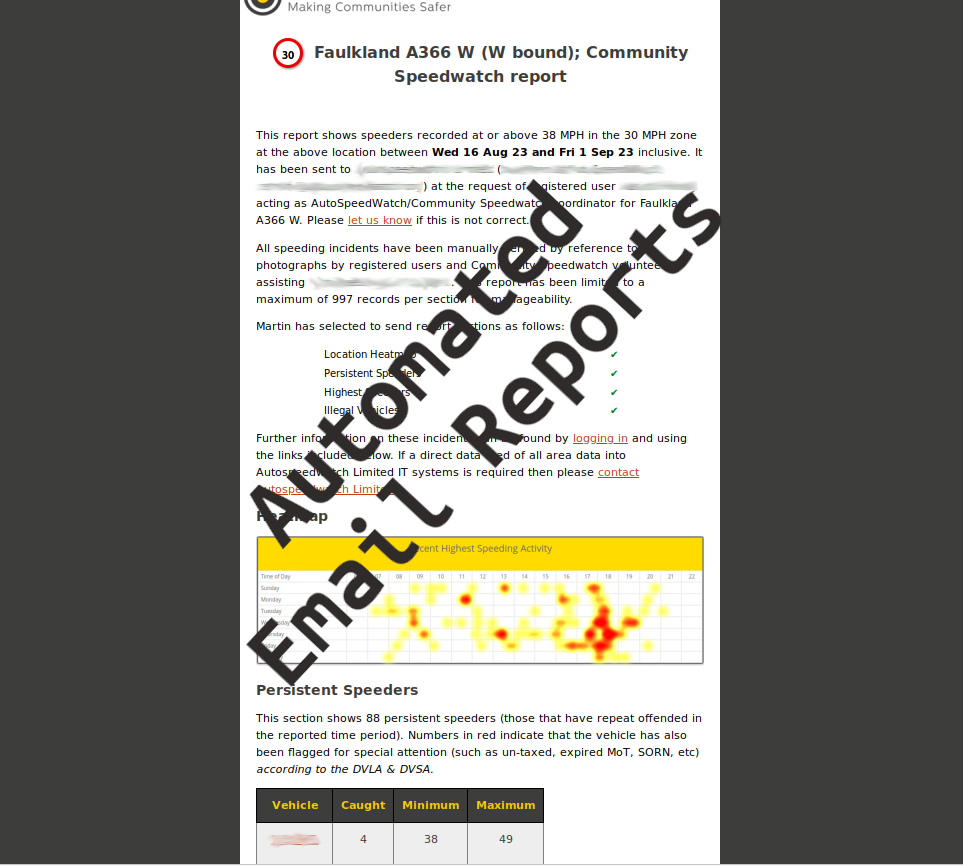 No need to return to the units to retrieve data; instead the reports can be sent at a touch of a button!
The reporting enables the police to rapidly and effectively target their resources in the most efficient manner, whether by visiting the registered keeper, writing a warning letter, or deploying the Speed Enforcement Unit.
Reported offences can also be 'throttled back' to limit the number of vehicles that are reported to the police, focusing just on those causing the greatest safety risks.
Heatmaps show when and where police should enforce
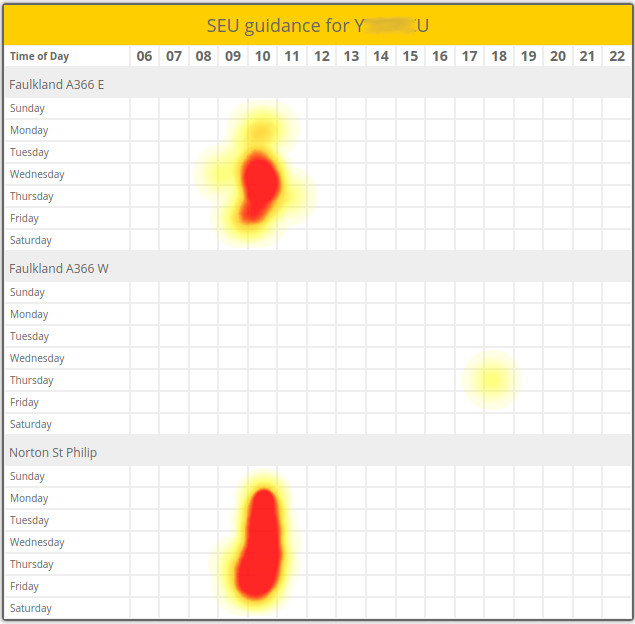 Heatmaps for both persistent speeders and for locations graphically guide Speed Enforcement Units on when and where to deploy to best effect. This makes their enforcement process more effective and efficient, reducing their workload, whilst making the biggest impact on road safety. The community guides and assists the police rather than fighting against them.
When combined with all the information from the neighbouring Roadside Units in other communities, the police get a virtually live indication of where their speeding management priorities lie. The system identifies those creating the greatest and most persistent risks to others, rather than penalising good drivers making a mistake.

AutoSpeedWatch - a proven tool that makes communities safer.